

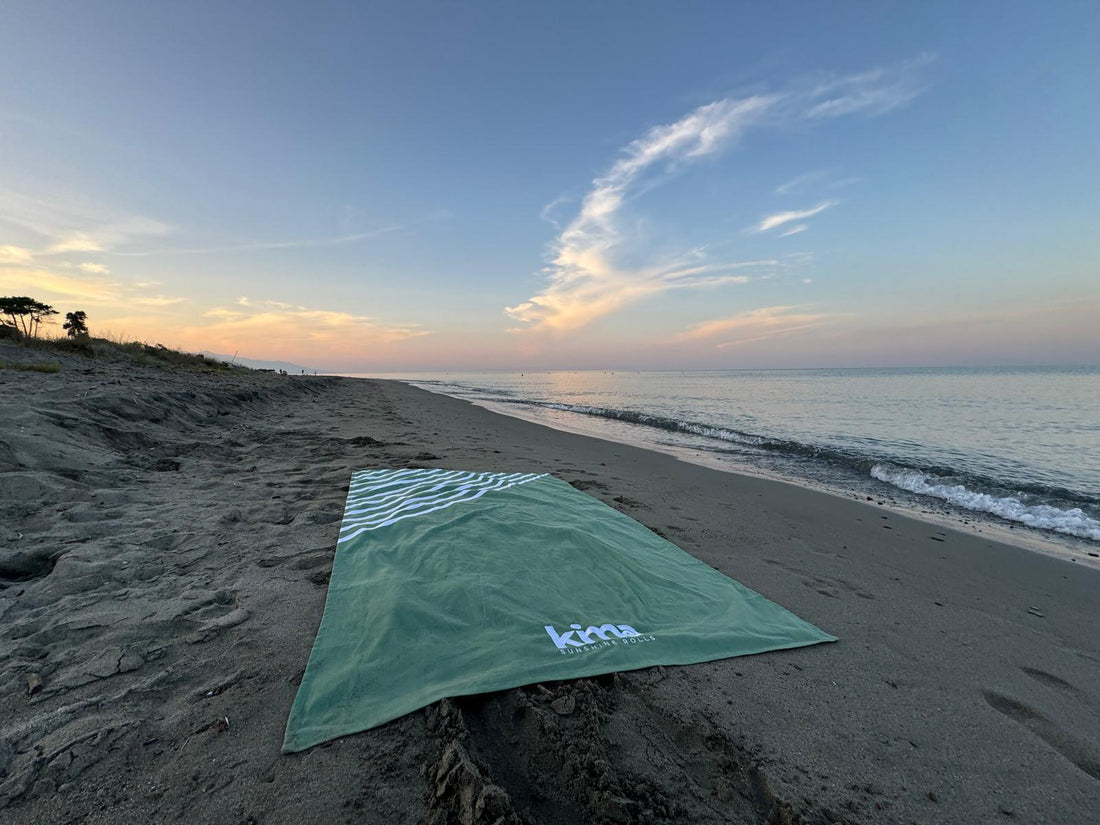
Sand-free beach towels: myth or reality?
Ah, the joys of the beach: the sun, the sea, the sand that gets everywhere... Wait, what? Sand getting into our belongings, our clothes, and even our car? Not ideal. Fortunately, sand-free beach towels have appeared, promising a seaside experience without these grainy annoyances. But do they really live up to their promises? Let's dive into the world of sand-free towels together to separate fact from fiction.
What is a sand-free beach towel?
Before judging their effectiveness, it's essential to understand what a sand-free beach towel is. Unlike traditional cotton towels, these towels are generally made of microfiber or specific technical materials. Their design aims to prevent sand from sticking to them, thus facilitating cleaning and providing a consistently clean surface for lying down.
The technologies behind sand-free beach towels
The magic behind these towels lies in their tight weave and specific material. For example, some use a double layer of fabric with a mesh that allows sand to pass through without sticking, as is the case with the QuickSand Mat. Others, made of microfiber, like those from KIMA, have a smooth texture that prevents sand from clinging, making them easy to shake off. Science Direct even conducted astudy on these materials, which you can find in this article.
Sand-free beach towels owe their effectiveness to specific technological innovations that prevent sand from becoming embedded in them. Here is an overview of the main technologies used:
High-density polyethylene (HDPE) weave
Some towels, like the QuickSand Mat developed by the Australian company CGear, use a high-density polyethylene weave. Initially designed for military applications, particularly to reduce dust during helicopter takeoffs and landings on sandy terrain, this material has unique properties. The specific weave allows sand to pass through the towel in one direction, while preventing it from rising to the surface, thus ensuring a clean and comfortable surface for the user.
Double-layer structure
Another technological approach relies on a double-layer design. This structure allows sand to pass through the first layer, but prevents it from rising thanks to the second layer, thus ensuring a sand-free surface.
Use of microfiber
Some sand-resistant towels are made of microfiber, a synthetic material composed of extremely fine fibers. This tight weave prevents sand from clinging to the towel's surface. Furthermore, microfiber is known for its high absorbency and quick-drying properties, thus providing an enhanced user experience.
These technological innovations allow sand-free beach towels to effectively fulfill their promise: to offer a seaside experience without the inconveniences associated with sand.

The advertised benefits
The manufacturers of these towels highlight several benefits:
-
Sand-resistant : The main selling point is, of course, their ability to remain sand-free, even after a windy day at the beach.
-
Quick drying : Thanks to materials like microfiber, these towels dry faster than traditional cotton towels.
-
Lightweight and compact : They are often lighter and less bulky, making them easier to transport.
The reality on the ground
But what is the reality? Are the promises kept? Several tests and user reviews provide interesting insights.
Sand-resistant efficiency
According to a test conducted by NeozOne on the Beau Soleil towel, it proved effective in preventing sand from sticking to it, thus offering a more pleasant beach experience. Similarly, the QuickSand Mat, thanks to its double-layer technology, allows sand to pass through without rising to the surface, guaranteeing a clean surface.
Drying and absorption
Microfiber towels, like those from Kima Rolls , are distinguished by their absorbency and quick-drying properties. They can absorb a large amount of water while drying faster than cotton towels.
Comfort and feel
However, some users note that the texture of microfiber towels is different from that of cotton towels, which may require an adjustment period. Furthermore, their lightness can make them more likely to blow away in strong winds.
Comparison with traditional towels
Cotton towels are prized for their softness and thickness, offering a comfortable feel. However, they tend to trap sand and take longer to dry. Sand-resistant towels, on the other hand, offer practical advantages, particularly in terms of cleanliness and quick drying, at the cost of a different texture.
User testimonials
-
Marie, 34 : " I was skeptical at first, but after trying a sand-free towel during my holiday in Corsica, I can't live without it. No more sand everywhere in the car! "
-
Lucas, 28 : " The towel's lightness is an undeniable plus. It takes up little space in the bag and dries in no time. "
Conclusion
Sand-free beach towels generally live up to their promises by offering a practical solution to avoid the inconveniences of sand. Although they may require a short adjustment period due to their different texture, their advantages in terms of cleanliness, quick drying, and ease of transport make them a wise choice for beachgoers.
So, myth or reality? It would seem that these towels are a very practical reality for fully enjoying the beach without bringing unwanted souvenirs home.