

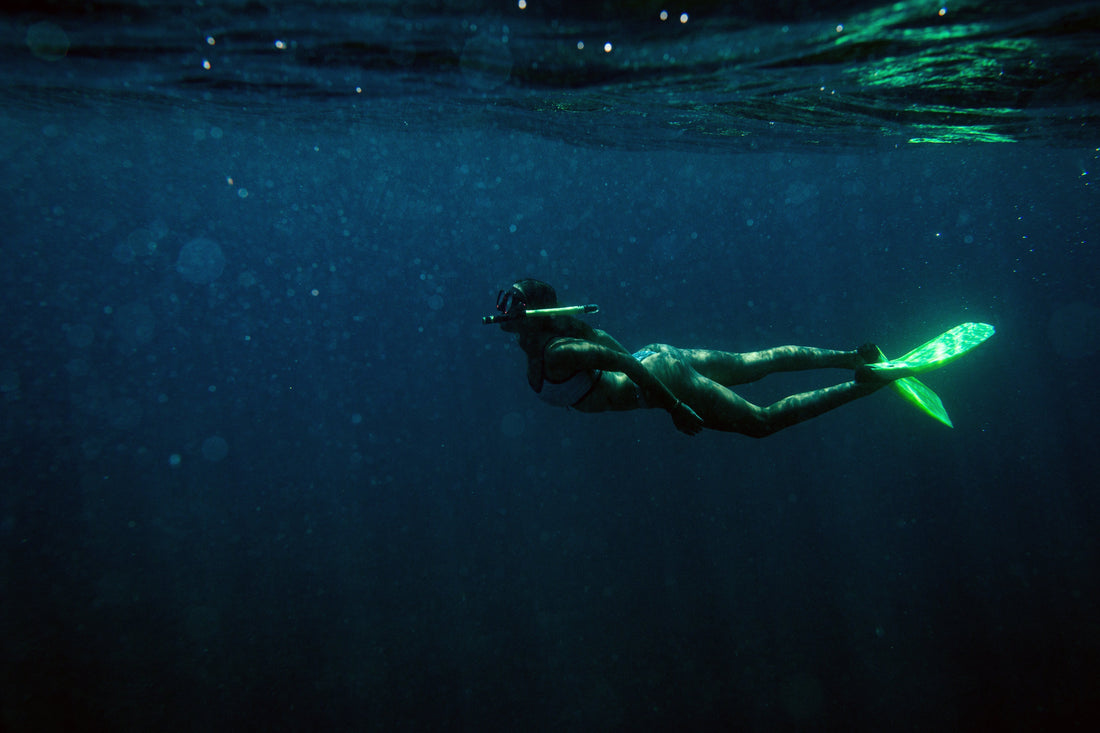
Everything you need to know about snorkeling and how to equip yourself properly
Snorkeling, or fin swimming, is a water activity accessible to everyone, allowing you to explore the wonders of the underwater world from the surface, equipped with fins, a mask, and a snorkel. Whether you're on vacation by the sea or simply curious to discover local marine life, snorkeling offers a fascinating window into a world often overlooked. In this article, we'll guide you through everything you need to know about snorkeling, from its origins to how to properly equip yourself, including safety tips and the best destinations for this activity.
What is snorkeling?
The term " snorkeling " comes from the English word "snorkel." It is a recreational water activity that involves observing the seabed while swimming on the surface of the water, equipped with a mask to see underwater, a snorkel to breathe without lifting your head, and usually fins for easier movement. Unlike scuba diving, snorkeling does not require specific training or heavy equipment, making it particularly appealing to beginners and families.
The origins of snorkeling
Although the term "snorkeling" is relatively modern, the idea of observing the underwater world dates back to antiquity. Writings by Aristotle mention divers using breathing apparatus similar to an elephant's trunk, allowing them to breathe underwater with the tip above the surface. However, the practice of snorkeling as we know it today developed in the 1940s and became popular from the 1960s onwards, particularly with the invention of modern equipment such as the mask, snorkel, and fins.
Why go snorkeling?
Snorkeling offers many advantages:
-
Accessibility : You don't need to be an expert swimmer or undergo specific training. With minimal equipment, anyone can participate.
-
Discovery : It allows you to observe marine flora and fauna in their natural habitat, offering an educational and enriching experience.
-
Well-being : Swimming in natural environments is excellent for health, both physically and mentally.
-
Ecology : When practiced responsibly, snorkeling raises awareness about the protection of marine ecosystems.
How to get started with snorkeling?
Choosing the right equipment
Appropriate equipment is essential for a successful snorkeling experience. Here are the basic elements to consider:
-
The mask : It must offer good visibility and be comfortable. Make sure it fits snugly to your face to prevent water from leaking in. There are single-lens masks offering a clear field of vision and double-lens masks allowing the addition of corrective lenses.
-
The snorkel : Opt for a snorkel with a comfortable mouthpiece. Some models are equipped with valves or deflectors to prevent water from entering, which is particularly useful in waves.

-
Fins : They facilitate movement and reduce fatigue. Full-foot fins are ideal for snorkeling, offering a good compromise between comfort and efficiency.

-
The wetsuit : Depending on the water temperature, a neoprene wetsuit may be necessary to maintain body heat and provide protection against irritation or cuts.
-
Accessories : A rash guard or UV-protective t-shirt will protect you from the sun, especially during long sessions. A marker buoy can also be useful to signal your presence to other boats.
-
For more advice, feel free to take a look at the tips provided by Nootica in this article.
Basic techniques
-
Breathing : Learn to breathe calmly through the snorkel. It's normal to need some time to adapt to this mouth breathing technique.
-
Buoyancy : Relax and let your body float. Avoid sudden movements that may frighten marine life.
-
Note : Move slowly and carefully observe your surroundings. Do not touch the corals or animals to preserve the ecosystem and your safety.
You will find an ultimate and detailed guide to getting started with snorkeling on the Divessi website.
Snorkeling safety
Safety is paramount when snorkeling. Here are some tips to follow:
-
Never go alone : It is always better to practice in pairs or in a group so that you can help each other if needed.
-
Check local conditions : Find out about tides, currents, and weather before venturing out.
-
Use a marker buoy : It allows boats to detect your presence and reduces the risk of collision.
-
Protect your skin : The sun can be intense at sea. Wear UV-protective clothing and apply eco-friendly sunscreen to avoid sunburn.
-
Do not approach wildlife too closely : Some animals may be dangerous or stressed by your presence. Observe them from a respectful distance.
Decathlon also gives you a complete list of tips to start snorkeling safely.
The best destinations for snorkeling
The world is full of exceptional snorkeling spots. Here is a selection of some of the most renowned:
1. The Great Barrier Reef, Australia
The Great Barrier Reef is the world's largest coral reef system, stretching over 2,300 km along the east coast of Australia. It is home to exceptional marine biodiversity, attracting millions of visitors every year.
-
Why go there? This UNESCO World Heritage site is one of the most beautiful places in the world to observe underwater life.
-
What to see? Multicolored fish, sea turtles, manta rays, reef sharks and spectacular corals.
-
Best spots: Heron Island, Agincourt Reef, Lady Elliot Island and Flynn Reef.

2. The Galapagos Islands, Ecuador
The Galapagos Islands are a true natural sanctuary, offering unparalleled snorkeling experiences amidst marine species unique in the world.
-
Why go there? The crystal-clear, nutrient-rich waters attract exceptional wildlife, and many species are endemic to the region.
-
What to see? Playful sea lions, hammerhead sharks, marine iguanas, giant tortoises and schools of tropical fish.
-
Best spots: Devil's Crown, Isla Lobos, Gardner Bay and Punta Vicente Roca

3. The Maldives
The Maldives are a true paradise for snorkeling enthusiasts. Comprising 26 atolls and more than 1,000 coral islands, they offer lagoons of exceptional clarity, perfect for observing marine life.
-
Why go? The calm, warm waters make for a pleasant experience even for beginners.
-
What to see? Manta rays, whale sharks, sea turtles and multicolored corals.
-
Best spots: Banana Reef, Manta Point, and the lagoon of Maafushi Island

4. French Polynesia
French Polynesia, with its turquoise lagoons and exceptional marine biodiversity, is a dream destination for snorkeling enthusiasts.
-
Why go there? The water is warm all year round and underwater visibility is excellent.
-
What to see? Schools of tropical fish, blacktip reef sharks, dolphins and coral reefs.
-
Best spots: Moorea Island, Bora Bora lagoon, and Rangiroa atoll.

5. The Seychelles
With their crystal-clear waters and protected nature reserves, the Seychelles offer ideal conditions for snorkeling.
-
Why go there? A pristine environment and diverse marine wildlife.
-
What to see? Parrotfish, sea turtles, rays and impressive corals.
-
Best spots: Praslin Island, Sainte-Anne Marine Park, and La Digue Island.

6. Indonesia (Bali, Raja Ampat, Komodo)
Indonesia is a must-visit destination for snorkeling, with thousands of islands and some of the richest coral reefs on the planet.
-
Why go there? One of the densest marine biodiversities in the world.
-
What to see? Manta rays, pygmy seahorses, clownfish and colorful corals.
-
Best spots: The Gili Islands, Raja Ampat and Komodo National Park.

7. The Red Sea, Egypt
With warm, clear waters all year round, the Red Sea is a prime destination for snorkeling enthusiasts.
-
Why go there? Excellent visibility and preserved coral reefs.
-
What to see? Dolphins, Napoleon wrasse, lionfish and coral gardens.
-
Best spots: Ras Mohammed, Marsa Alam and Giftun Island.

8. The Philippines
The Philippine archipelago is made up of more than 7,000 islands, offering countless exceptional snorkeling sites.
-
Why go? Exceptional marine biodiversity and spots for all levels.
-
What to see? Schools of sardines, turtles, thresher sharks and fluorescent corals.
-
Best spots: Apo Reef, Palawan Island and Moalboal.

9. Costa Rica
With its coastlines on the Pacific Ocean and the Caribbean Sea, Costa Rica is an underrated but spectacular destination for snorkeling.
-
Why go there? A great diversity of marine ecosystems.
-
What to see? Reef sharks, seahorses, eagle rays and tropical fish.
-
Best spots: Cahuita National Park, Isla del Coco and Isla Tortuga.

10. Florida (United States)
With its protected coral reefs and warm waters, Florida offers excellent snorkeling sites.
-
Why go there? Accessible and ideal for the whole family.
-
What to see? Manatees, barracudas, turtles and coral reefs.
-
Best spots: Key Largo (John Pennekamp Coral Reef State Park), Dry Tortugas and Bahia Honda State Park.

Looking for a specific destination? Take a look at this article, it might just be your dream destination!
Other practical tips for snorkeling
1. Best times for snorkeling
Snorkeling conditions can vary depending on the destination. It is important to plan your trip carefully according to the ideal season.
-
Tropical zones : From November to April for calm and clear water.
-
Red Sea : All year round, with a preference for spring and autumn.
-
Pacific and Caribbean : Avoid hurricane season (June to November).
2. Underwater Photography
Capturing the beauty of the underwater world can be a wonderful memory!
-
Recommended cameras : GoPro, Olympus Tough TG-6, or a waterproof smartphone case.
-
Techniques : Approach the animals slowly, use natural light and avoid digital zoom.
3. Snorkeling and ecology
Snorkeling must be practiced responsibly so as not to harm the marine environment.
-
Avoid chemical sunscreens : Opt for biodegradable creams or wear UV-protective lycra.
-
Do not touch the corals or marine life .
-
Leave no trash behind .
Conclusion
Whether you're a curious beginner or a marine wildlife enthusiast, there are numerous destinations around the world to enjoy snorkeling. If you'd like to learn more specifically about swimming gear, we'll tell you more in this article . By choosing the right equipment and respecting the marine environment, you'll have an unforgettable experience in the heart of the oceans. 🌊🐠