
Windsurfing vs Kitesurfing: What are the differences and which one to choose?
Hey riders! Today, we're diving into the world of board sports to compare two disciplines that thrill adrenaline junkies: windsurfing and kitesurfing. If you're wondering what the differences are between these two water sports and which one might be right for you, you've come to the right place. Hold on tight, it's going to be a wild ride!
Windsurfing: dancing with the wind
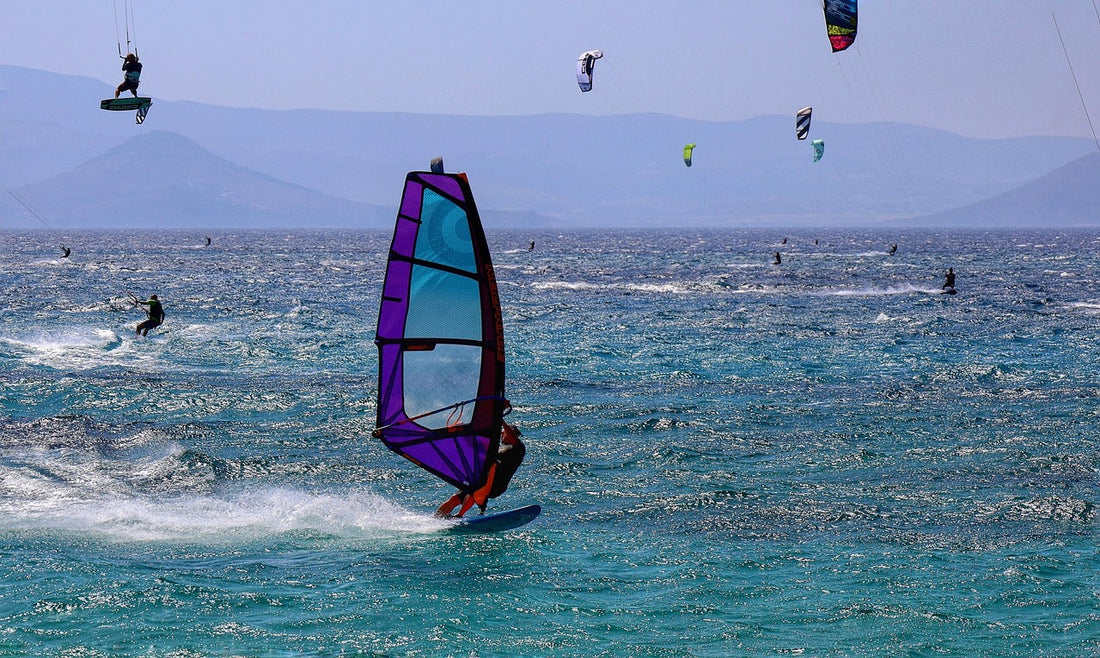
Windsurfing, or sailing boarding for short, is a water sport that combines surfing and sailing. Essentially, it involves standing on a board equipped with a sail attached to a mast. By adjusting the sail's angle with their hands, the windsurfer uses the power of the wind to move forward, turn, and even jump with the help of the waves. Originating in England in the 1960s, windsurfing experienced explosive growth in the following decades. 
Materials and equipment
Windsurfing requires a board, the size of which varies depending on skill level and conditions, and a sail of appropriate dimensions for the wind. This is completed by a mast and a boom (the horizontal bar you hold). The equipment can be bulky, especially if you own several sails and boards for different wind conditions.
Learning and Progress
Getting started in windsurfing can be a bit technical. You need to learn how to balance the board, maneuver the sail, and understand wind dynamics. However, with a few hours of practice on calm waters, you can quickly sail in a straight line. Progressing to more advanced maneuvers, such as jibing (quick turns) or jumping, requires time and perseverance. There are many clubs where you can learn this sport in good conditions, but UCPA is one of the best clubs that we recommend.
Requirements
Windsurfing is quite versatile in terms of conditions. It can be practiced in moderate winds, and larger boards allow sailing even in light winds. However, excessively strong or gusty winds can make it difficult, especially for beginners.
Kitesurfing: the aerial thrill
Kitesurfing, or kiteboarding, is a more recent sport that combines elements of surfing, wakeboarding, and paragliding. The kitesurfer is pulled by a large kite (kite) which they control using a bar connected by lines, while standing on a small board. Emerging in the 1970s, this sport truly took off in the 1990s.

Materials and equipment
Kitesurfing requires a board, usually smaller than a windsurf board, a kite of varying size depending on the wind, a control bar, a harness to attach the kite to the body, and of course, lines to connect everything. All the equipment is relatively compact and can be carried in a reasonably sized bag, which is an advantage for travelers.
Learning and Progress
Learning to kitesurf usually begins with mastering the kite on the beach. Understanding how to fly the kite, manage its power, and ensure your safety is essential. After this initial phase, you'll move on to exercises in the water, such as body dragging (being towed without the board) before attempting to stand up on the board. Although the beginnings may seem complex, once the basics are mastered, progress is often rapid, and the thrills are guaranteed. For perfect conditions, Dakhla is one of the world's best spots, and Dakhla Evasion offers customized lessons.
Requirements
Kitesurfing requires consistent, moderate winds. Winds that are too weak make kite control difficult, while winds that are too strong can be dangerous, especially for beginners. Furthermore, it's important to practice in open areas, free of obstacles, to prevent the lines from tangling or getting caught.
Detailed comparison: Windsurfing vs Kitesurfing
Now that we have an overview of both disciplines, let's delve into a more detailed comparison to help you make your choice.

Ease of learning
- Windsurfing : The first few hours can be confusing due to the need to find balance and handle the sail. However, once the basics are mastered, progress is steady. Advanced maneuvers require time and practice.
- Kitesurfing : The initial learning phase may seem more technical, especially regarding kite control. However, after overcoming this hurdle, progress is often faster, and the thrills come quickly.
Physical requirements
- Windsurfing : This sport puts a lot of strain on the upper body, especially the arms, shoulders, and back, to hold and steer the sail. Good physical condition is an advantage, especially in strong winds.
- Kitesurfing : Although physically demanding, kitesurfing relies more on the harness to support the kite's pull, thus reducing the strain on the arms. Leg strength and endurance are important for controlling the board and absorbing the impact during jumps.
Security
- Windsurfing : Considered safer, especially for beginners. In case of a fall, you simply release the sail, and the risk of injury is limited.
- Kitesurfing : Can present more risks, particularly due to the power of the kite and the possibility of being unintentionally lifted. Proper training and adherence to safety guidelines are essential.
Transport and logistics
- Windsurfing : The equipment is bulky and can be difficult to transport, especially if you own several sails and boards.
- Kitesurfing : More compact, the equipment usually fits in a bag, which makes it easier to transport, especially when traveling.
Equipment cost
The costs are comparable for both sports. New equipment can cost between €1,000 and €2,500, while used gear can be found for between €500 and €800. However, windsurfing equipment tends to last longer before needing replacement, especially if well maintained.
Navigation conditions
- Windsurfing : Can be practiced in a variety of conditions, including lighter winds. Spots with obstacles do not pose a major problem.
- Kitesurfing : Requires open areas, free of obstacles, and consistent winds. Places with trees, buildings, or other obstacles can be dangerous due to the long kite lines.
Conclusion: Which sport is right for you?
The choice between windsurfing and kitesurfing depends on your personal preferences, physical condition, and local wind and water conditions. If you enjoy technical challenges, are in good physical shape, and appreciate steady progress, windsurfing might be the best choice for you. On the other hand, if you're looking for thrills quickly, love the idea of flying above the water, and want more compact equipment for travel, then kitesurfing is for you.
It's also important to consider the conditions at your local spot. If you live in an area where the wind is often inconsistent or weak, windsurfing might be a better fit, as it performs best in those conditions. Conversely, if your spot benefits from consistent winds and an open space, kitesurfing will be an exciting option.
Finally, why choose? Many riders practice both disciplines depending on the conditions and their preferences. Whether you opt for windsurfing or kitesurfing, the most important thing is to have fun, enjoy the ocean, and feel that unique connection with the wind and waves. If these two sports aren't enough for you, we've got the ultimate guide to board sports in this article.
So, ready to take the plunge? 🌊💨